Culture: The Soul of Our Identity
Gowmatha
In Indian culture, Gomatha, or the cow, is revered as a symbol of life, nourishment, and prosperity. The cow holds a special, sacred status for Hindus due to its multifaceted role in traditional Indian society and its association with Hindu spirituality and mythology. Here are some reasons why Gomatha is considered so important:
Spiritual Significance
The cow is often seen as a maternal figure and a giver of life, embodying selfless service, as it provides milk, panchakam, and other resources without taking much in return. In Hindu mythology (culture), the cow is associated with various deities, most notably Lord Krishna, who is known as Govinda (protector of cows) and was raised in a community where cow protection and care were central.
Ecological Importance
Significantly, cows contribute to sustainable farming by providing dung and urine, which farmers actively apply as natural fertilizers and pesticides to promote organic agriculture. Beyond these agricultural benefits, cow dung also serves as a vital source of fuel, especially in rural areas. Moreover, rural communities traditionally utilize this versatile resource in construction as an eco-friendly material.
Role in Ayurveda
In the realm of Ayurvedic medicine, practitioners highly prize cow products for their healing properties. For instance, they specifically recognize Ghee for its beneficial effects on digestion and actively incorporate it into many Ayurvedic treatments. Furthermore, traditional medicinal practices frequently employ cow urine, as experts attribute antiseptic and health-enhancing properties to it.
Philosophical Symbolism
The cow actively represents a model of compassion, selflessness, and service—qualities that Hindu philosophy holds in high esteem. Therefore, by honoring Gomatha, Hindus consciously emphasize the values of caring for all beings, directly reflecting a commitment to non-violence (ahimsa) and respect for all forms of life.

Symbol of Abundance and Prosperity
Fundamentally, the cow symbolizes prosperity and wealth because it contributes directly to the livelihood of many rural households. Furthermore, it provides milk and dairy products, which hold an essential place in Indian diets and possess significant economic value. Beyond mere nutrition, families and practitioners actively utilize products like milk, ghee, curd, and butter in cooking, medicine, and rituals, thereby cementing the cow as an enduring symbol of abundance.
Culture and Ritual Importance
Cow products such as milk, ghee, and curd occupy an essential role in Hindu rituals and daily practices. Specifically, within the panchagavya—a mixture comprising five products (milk, curd, ghee, dung, and urine)—tradition regards each ingredient as purifying and beneficial. Consequently, priests and devotees frequently employ this mixture in Hindu rituals to invoke sanctity and purity.
Culture and Historical Heritage
Historically, ancient Hindu scriptures such as the Vedas and Upanishads strongly emphasize the protection of cows. Most notably, the Rigveda, one of the oldest texts, venerates cows as sacred and worthy of respect and care. As a result, this reverence has shaped Indian culture over centuries, persisting today as a key part of its spiritual ethos.
Preservation of Ancient Knowledge
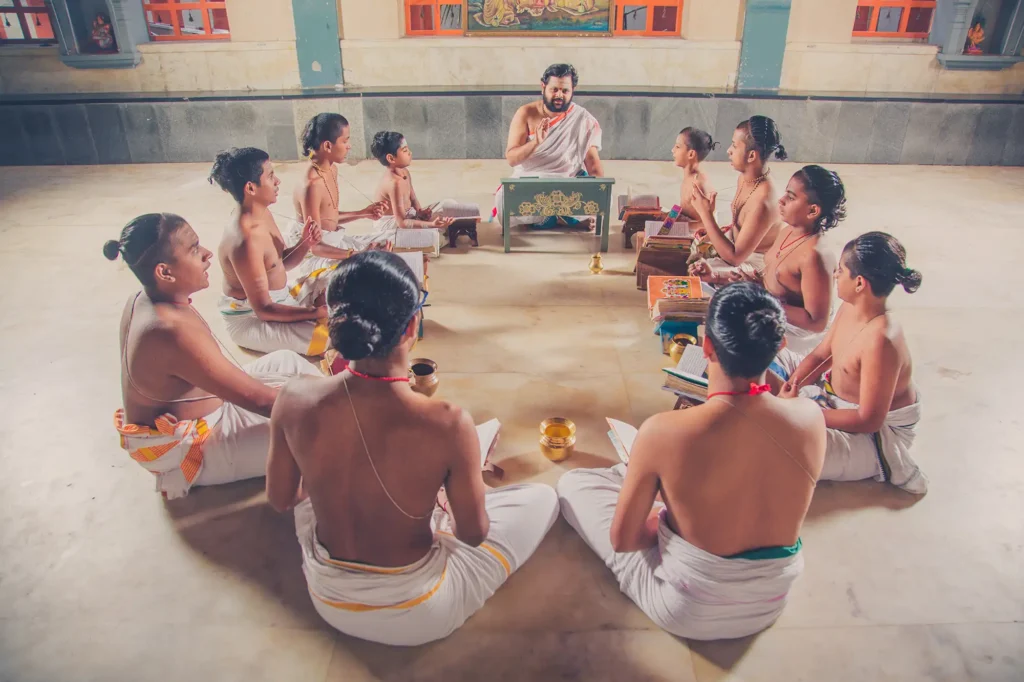
Undeniably, Veda Patashalas act as crucial guardians for the preservation of the Vedas and other sacred texts. Specifically, they keep the oral tradition alive, passing down knowledge through chanting and memorization. In doing so, they actively ensure the authenticity of texts that sages traditionally transmitted orally.
Vedic Chanting and Techniques
Specifically, the schools teach the precise recitation techniques required for chanting the Vedas accurately. According to tradition, this practice holds significant spiritual power, and practitioners regard it as essential for the effectiveness of rituals and prayers in Hinduism.
Training of Priests and Scholars
Crucially, Veda Patashalas actively prepare future priests, scholars, and cultural custodians to perform sacred duties in temples and various Hindu ceremonies. Through this rigorous training, they master rituals, astrology, and spiritual practices, thereby strengthening the cultural and religious framework of Hindu society.
Veda Patashala
Fundamentally, a Veda Patashala, or traditional Vedic school, plays a significant role in preserving, promoting, and transmitting India’s ancient spiritual, philosophical, and cultural heritage. Specifically, these institutions dedicate themselves to teaching the Vedas—sacred texts that form the core of Hindu philosophy and spirituality. Consequently, understanding their impact reveals why Vedapatashalas remain vital to Indian culture:
Culture Continuity
By upholding rituals, prayers, and recitations that have been practiced for thousands of years, Vedapatashalas maintain a link to India’s historical and cultural roots, allowing each generation to experience continuity with the past.
Spiritual Education
Beyond mere academic learning, Veda Patashalas actively instill spiritual discipline, ethical principles, and moral values. Furthermore, they offer a deeper understanding of Hindu scriptures, rituals, and ceremonies. Ultimately, this profound education brings a sense of purpose, inner peace, and moral integrity to their students.
Conservation of Sanskrit
Given that the vast majority of Vedic texts exist in Sanskrit, Vedapatashalas actively play an instrumental role in preserving the language. Moreover, scholars celebrate Sanskrit for its precision and depth; consequently, mastering this language remains key to unlocking the philosophical layers of the Vedas and other Hindu scriptures.
Yoga

Physical and Mental Health
Yoga combines physical postures (asanas) with controlled breathing (pranayama), which improves strength, flexibility, and circulation. It has been shown to reduce stress and anxiety, boosting both mental and physical health.
Spiritual Connection
In Indian culture, yoga is not only seen as a fitness practice but also as a spiritual journey. It is a path to connect with one’s inner self and, ultimately, with the divine.
Self-Discipline and Control
Yoga cultivates self-discipline through consistent practice, encouraging the practitioner to develop a balanced lifestyle. It also enhances self-control, helping individuals manage their desires and emotions effectively.
Union of Mind, Body, and Soul
The word “yoga” itself means “union” in Sanskrit. Yoga aims to bring together all aspects of one’s being, fostering a sense of unity that promotes holistic health.
Meditation

Mental Clarity and Focus
Meditation helps calm the mind, reduce distractions, and cultivate focus. In Indian culture, it has been used for centuries as a tool for introspection and achieving mental clarity.
Emotional Stability
Regular meditation helps in understanding and managing emotions. It leads to greater emotional resilience and the ability to respond calmly in challenging situations.
Spiritual Awakening
Meditation is often a means to spiritual growth in Hinduism. Through practices like Dhyana (focused meditation), practitioners aim to transcend the mind and connect with the deeper self, seeking higher states of consciousness.
Stress Relief and Peacefulness
Meditation promotes relaxation, lowers stress, and enhances a state of inner peace. This helps people cope with the pressures of life while maintaining a balanced, positive outlook.